Where Does Tanzania’s Tourism Money Actually Go?
Tanzania earns billions from international tourism, but tourism receipts are not the same as locally retained value. This article follows the money through package operators, lodges, parks, workers, suppliers, taxes, imports and profit flows to ask who actually benefits from the tourism economy.

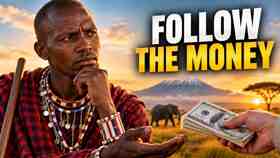
Tanzania earned more than four billion U.S. dollars from international tourism in 2025.
That is not a small tourism economy. It is one of the country’s most visible sources of foreign spending, carried into Tanzania through safari packages, Zanzibar beach stays, national parks, lodges, hotels, domestic transport, food, guides, excursions and the long chain of businesses that make international travel possible.
But a tourist dollar does not move through that chain only once.
It can be split before the traveler arrives. It can become a hotel payment, a park fee, a guide’s wage, a tax receipt, a supplier invoice, a fuel purchase, an imported food item, a commission, or a profit distribution. Some of those flows remain in Tanzania. Some do not.
That is why tourism earnings and locally retained value are not the same thing.
TANZANIA REALLY IS EARNING BILLIONS
The 2025 Tanzania Tourism Sector Survey estimated tourism earnings for the United Republic of Tanzania at about 4.41 billion U.S. dollars, up 13 percent from 2024. Leisure and holiday travel accounted for about 4.23 billion dollars, or 95.9 percent of the total.
Those numbers matter because this article is not built around the idea that Tanzania’s tourism boom is fake. The money is real. International visitors are spending heavily, and tourism remains a major foreign-exchange channel.
The harder question begins after the top-line receipt: who gets paid next?
PACKAGE TOURISM CHANGES THE FIRST MONEY FLOW
Package travel is especially important because it concentrates multiple purchases into a single transaction. In 2025, 58.8 percent of visitors to the United Republic traveled under package arrangements, and about 75.2 percent of total tourism earnings were associated with package-tour visitors. In Zanzibar, 67.2 percent of visitors used packages, accounting for 59.1 percent of tourism earnings.
That means a large share of Tanzania’s tourism economy is not built around travelers paying every Tanzanian supplier directly. Many travelers pay an international wholesaler, online platform, overseas travel company or package operator before they ever board a plane.
The official 2025 survey methodology makes that visible. When estimating package-tour expenditure, it deducts international airfare and the commission retained by international tour wholesalers. The methodology assumes 10 percent of package value is retained by international wholesalers for overhead and commission.
That 10 percent is not a national tourism-leakage rate. It is an accounting assumption used in the official survey. But it proves something important: some value can remain outside Tanzania before the traveler even lands.
WHAT HAPPENS AFTER THE MONEY ENTERS TANZANIA
Once spending reaches the Tanzanian side of the trip, the chain becomes more complicated.
An inbound tour operator may pay a lodge. The lodge may pay workers, buy food, pay electricity and water bills, purchase fuel, maintain vehicles, pay taxes, buy imported equipment, contract laundry or security, and retain profit. A safari company may pay drivers, guides, park fees, vehicle financing, fuel, mechanics, insurance and office staff. A restaurant may buy from wholesalers, farmers, fishermen, importers or distributors.
The same tourist dollar can therefore support several domestic activities before any final profit is calculated.
This is why ownership alone cannot answer the question. A foreign-owned hotel may still pay Tanzanian wages, taxes and local suppliers. A locally owned hotel may still depend heavily on imported food, furnishings, technology or equipment. Local ownership can improve domestic retention, but it does not automatically guarantee broad local benefit. Foreign ownership can create outward profit flows, but it does not mean every dollar leaves the country.
The useful question is not simply who owns the building. It is how deeply the business is connected to the domestic economy.
PARKS MAKE ONE PART OF THE FLOW VISIBLE
National parks offer one of the clearest measurable public-revenue channels.
Tanzania National Parks reported that the Northern Zone generated about 1.074 trillion Tanzanian shillings in revenue from the 2014/15 through 2023/24 period, representing 46.82 percent of TANAPA revenue during that span. TANAPA also reported 7.72 billion shillings in community projects under its social-responsibility programs.
Those figures do not tell us the total community benefit from tourism. They do show that park spending becomes more than a private transaction between a traveler and a tourism company. It can also finance conservation institutions and public or community projects.
That matters in Tanzania because wildlife is not merely scenery used by tourism. Parks are part of the economic infrastructure of the industry.
THE SUPPLIER CHAIN MAY MATTER MORE THAN THE HOTEL NAME
A major question is what tourism businesses buy locally.
World Bank work on Tanzanian tourism has emphasized the importance of stronger local value chains. UNCTAD research on tourism and agriculture shows why this is difficult in practice. Hotels and restaurants may want reliable volume, quality, timing, packaging and food-safety standards that small producers struggle to meet consistently. Farmers may be fragmented. Distribution can involve multiple intermediaries. Buyers may prefer consolidated suppliers that reduce operational risk.
So a hotel serving local tomatoes does not necessarily mean a farmer near the hotel sold directly to the kitchen. The food may move through wholesalers and distributors before reaching the guest.
That does not make the value chain illegitimate. It does mean the economic benefit is distributed differently than a simple “buy local” slogan suggests.
Imported inputs add another layer. Earlier World Bank work documented tourism businesses importing materials, equipment and some food because domestic suppliers could not always provide the quality, volume or consistency required. That is a real mechanism through which tourism demand can generate foreign-exchange outflows after the initial visitor spending enters the country.
The current scale of that leakage should not be guessed. Tanzania does not have a current authoritative national figure in the research packet that tells us one clean percentage for total tourism leakage.
That absence is itself important.
THE WORKER SHARE IS REAL, BUT EMPLOYMENT IS NOT THE SAME AS VALUE CAPTURE
Tourism creates jobs, but the number of jobs does not tell us how much tourism income reaches workers.
A guide, driver, receptionist, chef, cleaner, security worker, ranger, boat operator, salesperson and manager may all participate in the tourism economy. Their earnings are domestic value. But wages differ by occupation, company, location, season, formality and skill level.
The most useful employment question is therefore not simply how many people tourism employs. It is what kinds of jobs the sector creates, what those jobs pay, how stable they are, and whether workers can move into higher-value positions over time.
That is where training, professional advancement and ownership begin to matter together.
MAINLAND TANZANIA AND ZANZIBAR CANNOT BE FLATTENED INTO ONE SYSTEM
The United Republic is one country, but tourism administration is not identical across all of it.
Mainland Tanzania and Zanzibar have distinct institutions, rules and tourism systems in several areas. Official tourism statistics often report both United Republic totals and separate Zanzibar measures for exactly that reason.
A discussion of park fees on the mainland should not be casually treated as a Zanzibar rule. A Zanzibar resort transaction should not automatically be used to describe mainland licensing or taxation. The money trail changes depending on where the traveler is and which institutions govern the transaction.
SO WHERE DOES THE MONEY ACTUALLY GO?
There is no single defensible percentage that answers the title.
Tanzania earns substantial tourism receipts. From there, the money moves through several channels: international commissions before arrival; Tanzanian tour operators and accommodations; park and conservation systems; domestic transport; wages; taxes; local suppliers; imported goods and equipment; operating costs; financing; and profit distributions.
Some of those flows remain inside the country. Some leave it. Some are reinvested. Some become household income. Some become public revenue. Some support conservation. Some support imported supply chains.
The economic value of tourism therefore depends less on the headline number than on how much of the tourism chain Tanzania can connect to Tanzanian workers, firms, suppliers, institutions and communities without weakening the quality and reliability that international tourism depends on.
That is the deeper opportunity inside the tourism economy.
Not simply attracting more visitors.
Building more of the value chain around the visitors already coming.
And that raises the next question. If you are one of those travelers and something goes seriously wrong medically, how does the system you are traveling through actually respond?
References & Sources
1. 2025 Tanzania Tourism Sector Survey / International Visitors’ Exit Survey. Supports 2025 earnings, package shares, expenditure methodology and international-wholesaler accounting assumption. https://www.nbs.go.tz/uploads/statistics/documents/en-1783059562-Tanzania%20Tourism%20Sector%20Survey%20Report.pdf
2. Bank of Tanzania Annual Report 2024/25. Supports macro tourism/travel receipt cross-check. https://www.bot.go.tz/Publications/Regular/Annual%20Report/sw/2025122912344595.pdf
3. Tanzania National Parks Northern Zone Quick Reference / operational profile. Supports Northern Zone revenue and reported community projects. https://www.tanzaniaparks.go.tz/uploads/publications/en-1730810409-QUICKREFERENCEGUIDEFINAL.pdf
4. World Bank, Transforming Tourism: Toward a Sustainable, Resilient, and Inclusive Sector. Supports tourism development, jobs, inclusion and local-value-chain framing. https://www.worldbank.org/en/country/tanzania/publication/tanzania-economic-update-how-to-transform-tourism-into-a-more-sustainable-resilient-and-inclusive-sector
5. UNCTAD, Enhancing Linkages Between Tourism and the Sustainable Agriculture Sectors in the United Republic of Tanzania. Supports local supplier and agriculture-linkage analysis. https://unctad.org/publication/enhancing-linkages-between-tourism-and-sustainable-agriculture-sectors-united-republic
6. World Bank, The Elephant in the Room: Unlocking the Potential of the Tourism Industry for Tanzanians. Historical context for imported inputs, skills and local value capture. https://www.worldbank.org/en/country/tanzania/publication/tanzania-economic-update-increasing-tourism-for-economic-growth
Subscribe to our Newsletter
Get new destination research, travel context, and The Informed Expat updates delivered directly to you.
Subscribe to The Informed ExpatTravel Gear Toolkit
Essential travel gear, luggage, accessories, technology, and travel-friendly products curated from real-world travel experience.
Browse Travel GearTravel Wellness Toolkit
Wellness products, travel recovery essentials, self-care resources, and tools designed to support wellbeing while exploring the world.
Explore Wellness ResourcesTravel Guides & Digital Resources
Support the publication and access travel-focused digital resources, guides, and future planning materials.
Explore Travel Guides & ResourcesTravel Discounts
Explore travel savings opportunities, discounts, and member benefits available through current travel programs.
Explore Travel DiscountsTravel Insurance
Review travel insurance options and coverage solutions designed to help protect your trip and provide peace of mind while abroad.
Compare Travel InsuranceWatch Empress Travels on YouTube
Go deeper with cinematic travel documentaries that trace how culture, language, trade, migration, medicine, faith, business, and everyday life shape the places we move through. Empress Travels turns destinations into living systems, connecting history to the present so you can understand a place before you consume it.
Watch the DocumentariesSupport the Work
Support independent travel research, cultural documentary storytelling, destination guides, and continued publication work.
Support the WorkShare This Article
If this article would help someone else travel with more context, share it with them.